_edited.jpg)
Scrap Metal Guide
If you have any items that are not included in the list, please feel free to contact us with any inquiries.
Aluminum Metals

Aluminum
Verify whether the metal is lightweight, non-magnetic, and exhibits a dull silvery-grey, matte finish. It is fairly soft and can be scratched easily, in contrast to tougher stainless steel. A crucial test involves using a magnet: if it doesn't adhere, it is probably aluminum rather than steel. For additional testing, you can utilize a grinder. If it fails to produce sparks, it is aluminum. If it does spark, it is steel.

Aluminum Breakage
Aluminum breakage is identified as cast aluminum contaminated with other materials (steel, plastic, rubber). It is characterized by being non-magnetic, lightweight compared to steel, and often includes items like mower decks, motors, or transmission casings. It is typically 35-50% aluminum, with the rest being contaminants.

Cast Aluminum
To identify whether an item is made of cast aluminum, check for a lightweight, dull grey look with a somewhat rough, pitted texture that frequently displays tiny sand-like flaws or molding lines. It is non-magnetic, brittle (it breaks instead of bending), and does not have the sharp edges typical of machined or die-cast components.

Die Cast
Die-cast components, which are usually made from zinc or high-pressure aluminum, tend to be much heavier than regular cast aluminum. Surface Finish: Die-cast items generally feature a smoother and more polished surface, often appearing whitish or dull gray, and can include detailed and intricate designs. Pitting/Texture: In contrast, cast aluminum usually has a rougher, coarser, or porous texture, with small indentations that may result from the sand casting process. Part Lines: Die-cast parts frequently exhibit sharp "flash" lines where the two halves of the mold come together.

6061/6063
Surface Finish: The 6063 aluminum boasts a superior and smoother surface finish, making it ideal for anodizing and decorative architectural uses. In contrast, 6061 has a duller and rougher finish. Cross-Sectional Shape: 6063 is frequently utilized for complex, intricate, and hollow extrusion shapes (such as window frames and tubing). On the other hand, 6061 is commonly used in simpler structural shapes like L-beams, I-beams, or thicker, solid plates. Corners: The architectural 6063 angle often features sharp, square corners, whereas the structural angle of 6061 typically has rounded corners (fillets) on the inside, and occasionally slightly rounded corners on the outside.

ACSR/EC Wire
Composition: EC wire consists entirely of aluminum, while ACSR is made from a combination of steel and aluminum, typically in a 1:6 or 1:4 ratio. Strength & Sag: ACSR offers significantly greater strength and has reduced sag over long spans compared to pure EC aluminum wire. Applications: EC is used for building wiring or distribution purposes; ACSR is utilized for overhead power transmission lines.

Stainless Steel

304 Stainless
Grinder/Spark Test: When ground, 304 stainless steel emits long, slender, orange sparks with minimal forks. Magnet Test: 304 stainless is either non-magnetic or exhibits very weak magnetism. Unlike 316, 304 does not contain molybdenum. A molybdenum test kit will not react with 304, but will show a brown color for 316 stainless steel.

316 Stainless
To ignite sparks from 316 stainless steel, press the metal against a grinding wheel to create sparks, looking for a sparse, shorter burst of yellowish-orange sparks. In contrast to carbon steel, 316 generates fewer sparks that tend to split at the tips instead of branching out, resembling, but often being denser than, 304 stainless. Salt Water Spray Test (Long Term): Method: Spray a salt water solution (1 teaspoon of salt mixed with 1 cup of water) onto the metal and let it sit for 6 to 24 hours. Result: 316 will remain rust-free, while lower grades may begin to show early signs of corrosion.

304/316 Turnings
304 and 316 stainless steel turnings are valuable industrial scrap produced from machining processes. 304 is easier to machine, whereas 316 is more challenging due to its higher hardness, corrosion resistance, and molybdenum content. Both types necessitate the use of sharp carbide tools and coolant to control work hardening and heat.
Copper/Brass

#2 Copper
#2 copper is recognized by its dull, tarnished, or soiled look, frequently showing signs of paint, solder, brass attachments, or oxidation. It is made up of pure copper, like pipes or wires, that lack a bright and shiny finish. Important signs to look for include soldered plumbing connections, tinned copper (which has a silver-like coating), or fine, uninsulated, hair-thin wire (thinner than 16 gauge).

#1 Copper
#1 copper is unalloyed, uncoated, and clean, free from solder, paint, or heavy corrosion. It is usually, but not always, shiny, appearing as clean, dark-reddish, or bright-colored pipes, tubing, or thick (>16 gauge) wire. It is distinguished from #2 copper by its lack of contaminants (solder, fittings).

Bare Bright
Clean, bright, and polished, showing no or very few dark spots or tarnishing. Material Type: Only solid or stranded wire/cable is acceptable; it excludes pipe, tubing, or sheets. Thickness: Typically between 12 to 16 gauge or thicker. Delicate, "hair wire" (extremely thin strands) is frequently classified as #2 copper due to its tendency to burn in smelters. Condition: Should be entirely stripped, free from insulation, varnish, paint, or solder.

Copper Transformers
Use a file or grinder on the windings. Copper will show a bright reddish-brown or "orange" color, while aluminum will appear silver or white. Weight Comparison: Copper is roughly 3 times denser than aluminum. A copper transformer will feel much heavier than an aluminum one of the same size. Visual Inspection (Inside vs. Outside): Do not rely on the wire surface color, as aluminum is often coated to look like copper. Always cut into the windings to check the core metal. Appearance: Copper windings often appear more compact, while aluminum units may have thicker, more voluminous windings to achieve the same power rating.
.jpg)
Brass/Copp. Breakage
Yellow brass contamination: Typical instances involve brass faucets featuring steel screws, valves equipped with iron handles, or plumbing components that have plastic fittings attached. Copper breakage contamination: Copper breakage is considered "dirty" and usually has 5% or greater impurities, including solder joints, paint, varnish, or non-copper materials that are attached.

Yellow Brass
Color Test: Yellow brass appears bright, yellow, or gold in color. File/Scratch Test: To check, use a file or grinder on a small section; if the metal beneath is shiny and yellow, it is probably yellow brass. If it looks silvery, it is likely plated. Magnet Test: Yellow brass does not attract magnets. If a magnet adheres, it is probably steel or iron that has been plated with brass. Visual Inspection: Yellow brass typically has a smoother, forged look in contrast to the rougher, cast texture of red brass.

Red Brass
The File Test: You can either file or grind the surface. Red brass will have a reddish-copper hue, whereas yellow brass displays a more vibrant, golden tone. Color Check: In areas that are clean and free from corrosion, red brass resembles bronze or dark copper more closely, while yellow brass shines with a bright, metallic yellow. Patina & Aging: When subjected to the elements, red brass acquires a dark brown, "penny-like" patina or a light green shade, akin to copper. In contrast, yellow brass usually turns a dull, brownish color or may form a white, powdery layer due to dezincification. Common Items: You can commonly find red brass in robust commercial plumbing applications, water meters, sprinklers, and valves.
Insulated Wire

Low Grade 35%
35% low-grade insulated copper wire (ICW) is typically recognized by its high insulation-to-copper ratio, with the plastic sheath accounting for about 65% of the overall weight, while the copper portion is approximately 35%. This type of wire is usually defined by its thin, stranded wires or cables that consist of several small conductors encased in a robust, thick outer jacket. Copper breakage contamination: Copper breakage is considered "dirty" and usually has 5% or greater impurities, including solder joints, paint, varnish, or non-copper materials that are attached.


#1 Insulated 65%
Appearance on Cut: When cut, you see a significant, solid amount of copper compared to the insulation. Weight: It is relatively heavy, which indicates a high copper-to-insulation ratio. Comparison to Other Grades: Unlike #1 insulated wire (which often has a higher, 75%+ recovery), 65% wire has a slightly higher percentage of plastic/rubber insulation relative to the metal.

#1 Insulated 85%
Stripping/Visual Inspection: The best way to identify 85% wire is to strip a small section. The insulation should feel very thin (often less than 1mm-2mm) compared to the thick copper wire inside. Check Jacket Markings: Look at the outer sheath for AWG size (e.g., 10 AWG, 8 AWG, or larger) and insulation types (e.g., THHN, THWN). No "Fine" Strands: Usually, 85% wire is not made of tiny "hair-like" strands, but rather solid or coarse, thick strands.
Additional Metals

ACRs/ACR Cutoffs
Visual Inspection: Check for slender tubes that run through the fragile, silver-hued fins. The tubes will have an orange/pink (copper) appearance, while the fins will be a silvery-white (aluminum). Magnet Test: A magnet will not adhere to copper or aluminum. If it clings to the end plates, they are made of steel. Scratch Test: Gently scratch the metal, especially on the end tanks. Copper will reveal a dull red/orange hue, whereas aluminum will shine bright silver. Weight Difference: Aluminum radiators are much lighter compared to pure copper or copper/brass radiators of the same dimensions.
_edited.jpg)
Soft Lead
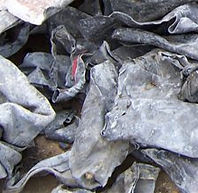
1. Fingernail test: if the metal is easily marked or can be gouged with your nail, it indicates that it is soft lead. Conversely, if it is difficult to scratch or cannot be scratched at all, it suggests a harder alloy. 2. File Test: Take a metal file to strip away the outer oxidation from the piece. Result: A file will easily bite into soft lead, resulting in a bright, shiny, silvery-white surface. 3. Weight/Appearance: Weight: Lead is very dense, making it significantly heavier than aluminum, zinc, or steel, and it generally feels much heavier than its size would imply. Color/Surface: Lead has a dull blue-gray, matte finish, but when freshly cut or scratched, it reveals a bright, shiny silver.

Wheel Weights
Material (Magnet Test): Employ a magnet to detect steel weights, which are frequently found and typically labeled 'FE'. Material (Cut Test): Utilize wire cutters on an edge; lead is quite soft and simple to cut, whereas zinc and steel are tougher and more challenging to cut. Material (Appearance): Lead appears dull; zinc tends to be shinier with a contoured form, and may feature 'ZN' or 'Z' stamped on them.

#1 Cast Rotrs/Drums
Visual Inspection (Edge Profile): Cast drums typically exhibit a straight, thick, and robust edge, while pressed steel drums are characterized by a thin, rolled-over outer lip. Surface Texture: Cast iron usually presents a grainier, rougher, and duller grey surface in contrast to the smoother look of steel. Part Numbers and Casting Codes: Check for manufacturer names (like ConMet, Webb), part numbers, and date codes that are cast directly into the iron. Maximum Diameter/Thickness Markings: An important sign is the maximum allowable internal diameter ("Max Dia" or "Limit") or the minimum thickness that is stamped on the drum or rotor edge. The "File" Test: When using a metal file, cast iron will yield dull grey shavings, whereas steel will create shiny shavings.
Iron
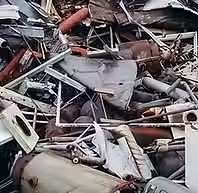
Magnet Test: A strong magnet is the fastest way to identify ferrous metals (iron/steel). If the magnet sticks firmly, it is ferrous. If it does not, it is likely copper, aluminum, or brass. Rust & Color Check: Iron and steel readily oxidize, showing brown or red rust, especially compared to non-ferrous metals like aluminum (dull silver) or copper (red/brown). Weight & Density: Ferrous items generally feel much heavier and denser than aluminum, which is light, even if they appear similar in size.

Lead Acid Batteries
Weight & Size: Lead-acid batteries tend to be quite heavy because of the lead plates they contain. Labeling: Check for labels that say "Pb" (the chemical symbol for lead), "Lead Acid," "AGM" (Absorbed Glass Mat), "Gel," or "VRLA" (Valve Regulated Lead Acid). Caps/Vents: If the battery features removable screw caps or a vent strip on the top for adding water, it indicates that it is a flooded lead-acid battery. Sloshing Sound: If you gently shake it and hear liquid sloshing around, it confirms that it is a flooded lead-acid battery. Voltage: The majority of lead-acid batteries operate at either 6V or 12V.